Contents
I was not planning on doing this.
My 15 minutes were long over, the Star Wars “canon” had sprawled far beyond a couple trilogies, and a whole generation had come around on the prequels. “Machete Order” had already made its little trip around the internet and settled into its natural final form: people telling me in comment sections that it sucks.
I’ve been asked over the years if there’s a Machete Order for various movie series like Lord of the Rings or The X-Men1, but I assumed my days of rearranging popular franchises and throwing a few installments overboard were behind me.
But then I had kids.
Specifically, I had kids that eventually got old enough for live-action movies with a little swearing, some mild violence, and the occasional purple alien committing galactic genocide with costume jewelry. They were curious about superheroes, but not invested yet, and I started thinking about what I actually wanted to share with them.
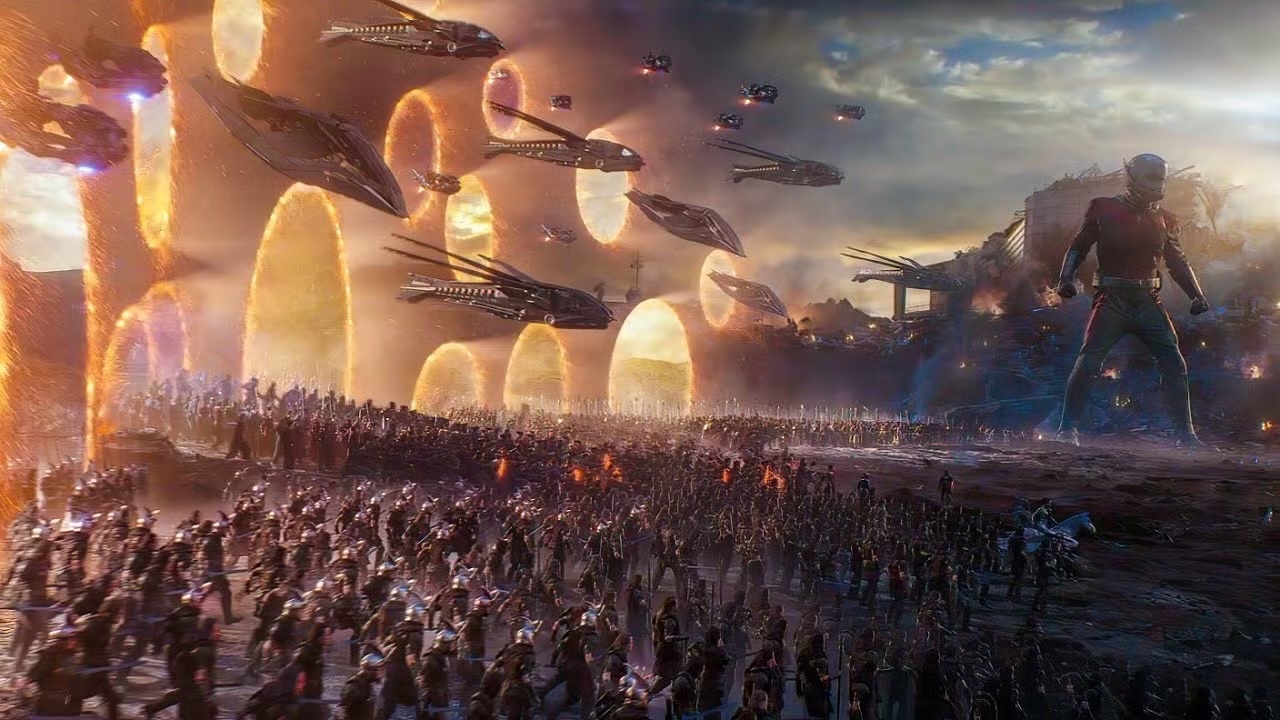
Holey shit!
The answer was simple: I wanted them to experience Avengers: Endgame.
Not the MCU and all of its associated elements, just Endgame. For me, Endgame is still one of the greatest theater experiences of my life. I have never seen anything else that matched the sheer radiant joy of the “portals” scene. It was the payoff for decades of loving comic books, action figures, team-up stories, and ridiculous continuity. I have probably watched that sequence fifty times and it still affects me every single time.
So the question became: what is the the shortest, cleanest road to Endgame that preserves the emotional punch of the finale (maybe even sharpens it) without introducing a bunch of loose ends?
Out of that question came this, the Marvel Cinematic Universe Machete Order. Named because I’m still a vain asshole, etc.
The original Star Wars Machete Order re-centers those movies around Luke. This one is doing something slightly different. It is trying to point the entire experience at one grand endpoint and make that payoff hit as hard as possible.
Here, the story starts, builds to Endgame, and concludes. The saga is over afterwards. The lights go up. Finito. Whatever Marvel decided to do later is its own separate problem. This is structured more like a miniseries with a discrete conclusion.
The Order
MCU Machete Order has four themed phases before the finale, each with exactly five films, for a total of 21 movies.
Movies are grouped around a narrative concept, a few are cut, several are moved around, and some post-credits scenes have to be treated like live explosives. In a couple of places, whether you watch the stinger actually matters - any time the stinger teases something that won’t pay off, spoils something because of re-arranging, or contradicts another part of the story, we skip it.
- Phase 1: Iron Man, Captain America, Thor, Iron Man 2, The Avengers
- Phase 2: Winter Soldier, The Dark World, Age of Ultron, Ant-Man, Civil War
- Phase 3: Spider-Man: Homecoming, Captain Marvel, Black Widow, Doctor Strange, Black Panther (any order)
- Phase 4: Guardians of the Galaxy, Ragnarok, Guardians 2, Ant-Man and the Wasp, Infinity War
- Finale: Endgame
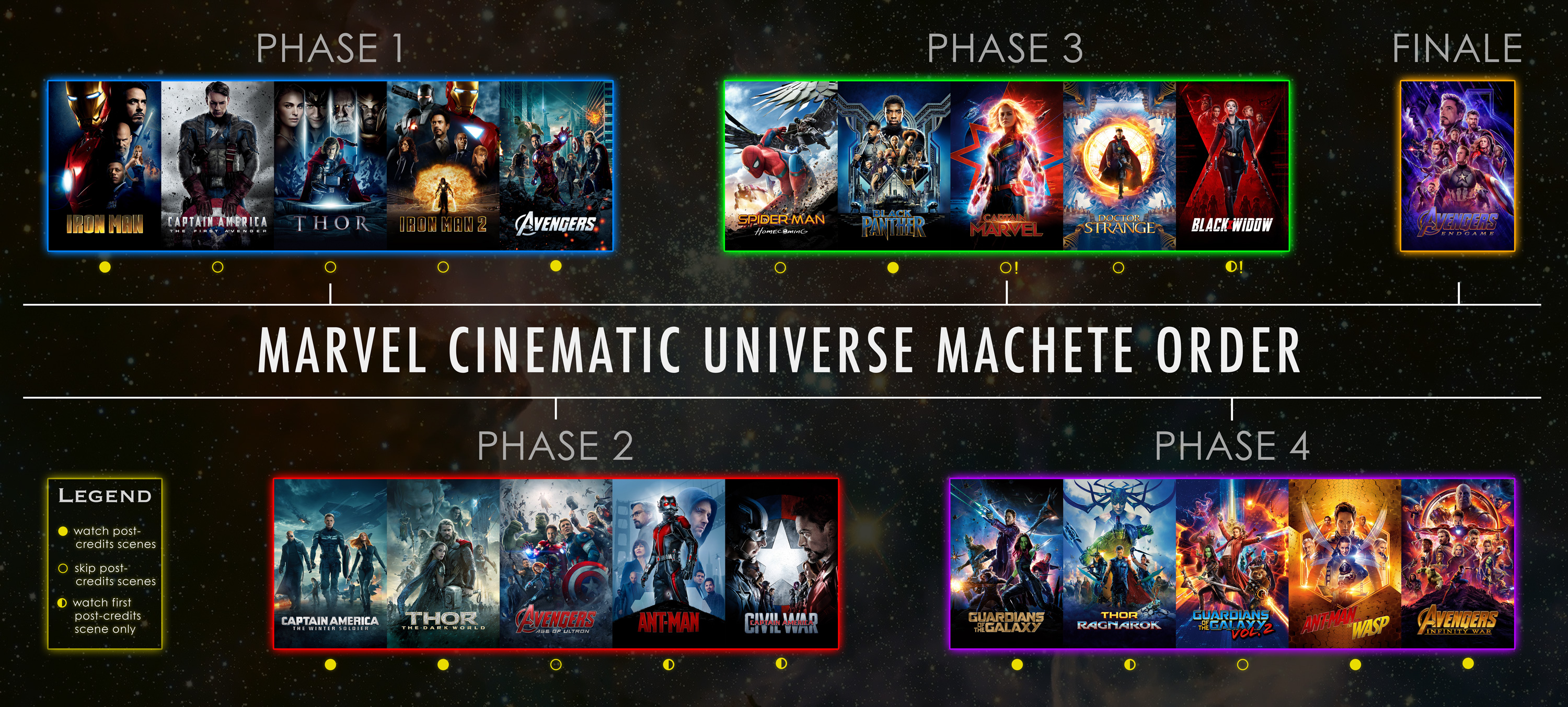
Yes, twenty-one movies is still a lot of movies. This is the MCU we are talking about. Even the short version is frankly too much.
Still, compared to “watch everything,” this is lean. Did you know the MCU is over 550 hours? We’re clocking in around under a tenth of that, but more importantly, everything here has a reason to be here. If a movie does not make Endgame land harder, it gets dusted. If a post-credits scene only exists to tee up some later branch of the franchise, it goes in the trash.
Why Not Release Order?
Release order is how the MCU was built. It is historically correct, which is a phrase people use right before making you sit through something in an order that is narratively clumsier but technically defensible.
Coming soon: Doctor Bong
Release order gives you the experience audiences had in theaters. You see Marvel invent the formula, expand the universe, adjust course, learn from mistakes, overuse sky beams, retcon errors, drop post-credits teases, and discover that Chris Hemsworth is funny.
That is a perfectly valid way to watch them, but it is partly the story of Marvel Studios figuring itself out in public. That was fun while it was happening, and an army of YouTubers made a living off it, but it is not the cleanest way to get somebody to one big emotional ending. It’s fine, but it’s not the most efficient path or the most satisfying.
The clearest example is Captain Marvel. In release order it lands between Infinity War and Endgame, which made commercial sense because Marvel needed Carol on the board before the finale. But if the goal is narrative momentum, stopping between the Snap and its resolution so you can squeeze in an origin story from the 90’s is deranged.
Why Not Chronological Order?
Chronological order is not even defensible. You’re gonna start with Captain America and then go right to Captain Marvel? Or do you need a couple seasons of Agent Carter first? When you do watch the opening flashback scene of Guardians 2 before stopping it and putting on the opening scene of Ant-Man? I don’t even really believe anyone out there would attempt to argue for a chronological order except trolls, this isn’t a serious position.
Chronology is not the same thing as storytelling. A story begins where the story begins, not at the earliest timestamp in the fictional universe.
Chronological order only works if you add so much additional viewing material in that you establish major throughlines an alternative way. In other words, it works if you add more content, and I’m trying to remove as much as possible.
The MCU starts with Iron Man, full stop.
Are You Just Cashing In On The Popularity Of “Doomsday”?
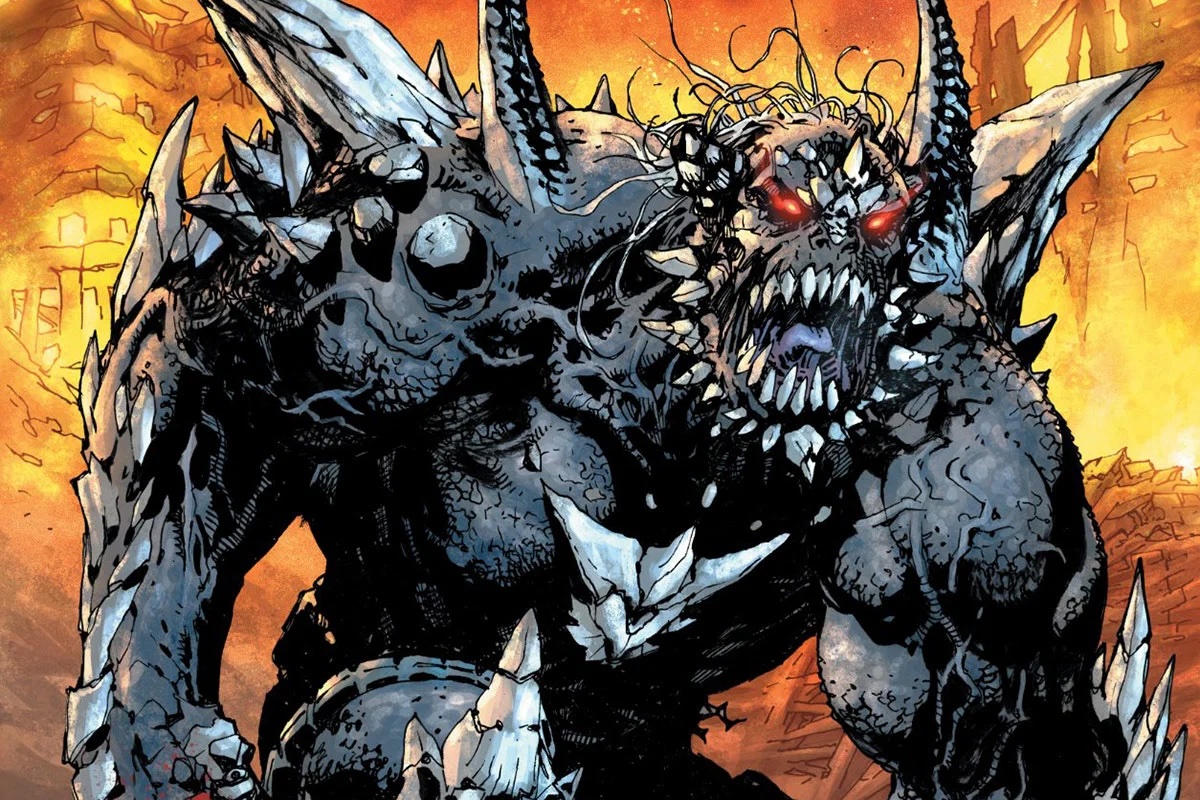
This is Doomsday, right?
Here’s how bad I am at aligning my blog to popular trends: this entire article centers around the idea that Endgame should be the final MCU movie you watch, and intentionally includes nothing that will make any sense of Doomsday. If you watch in this order, you are not remotely prepared to drop some cash for a Doomsday ticket. Stay home.
Doomsday is like the antithesis of this. To make it work, not only do you have to watch all of this MCU bullshit including countless hours of television shows, you have to watch the entire X-Men canon, not to mention Spider-Man: No Way Home, which requires pulling in 5 different Spider-Man movies from Sony and arguably a few Venom entries as well, as well as Deadpool & Wolverine, which requires watching Fantastic Four and Blade and Daredevil and Elektra.
Forget all of that. Don’t even go watch Doomsday, whatever they’re doing utterly cheapens Tony Stark’s ending, Downey-as-Doom is stupid and sucks a butt, I can confidently tell you I hate it before the movie’s even out. How’s that for failing to cash my Disney Shill check?
If you’re excited Chris Evans and Ian McKellen and Patrick Stewart and Channing Tatum are all coming back, you are a true-blue MCU purist and are very much not the target audience here. I’m trying to get my tablet junkie children to watch Endgame before they lose interest and play Geometry Dash, not give John Campea another podcast segment.
Preserve the Portals
Everything in this order is built around maximizing, as efficiently as possible, the emotional catharsis of the portals scene.
That may sound reductive, but I think it is the right way to think about Endgame. The portals scene is not just fan service. It is the emotional cash-out for the entire Infinity Saga. Introductions, alliances, grudges, oddball side characters, distant settings, snapped heroes, and long-running relationships all get converted into one giant moment of return, and it is central to the theme and motif of the entire saga: that the only way to win is together.
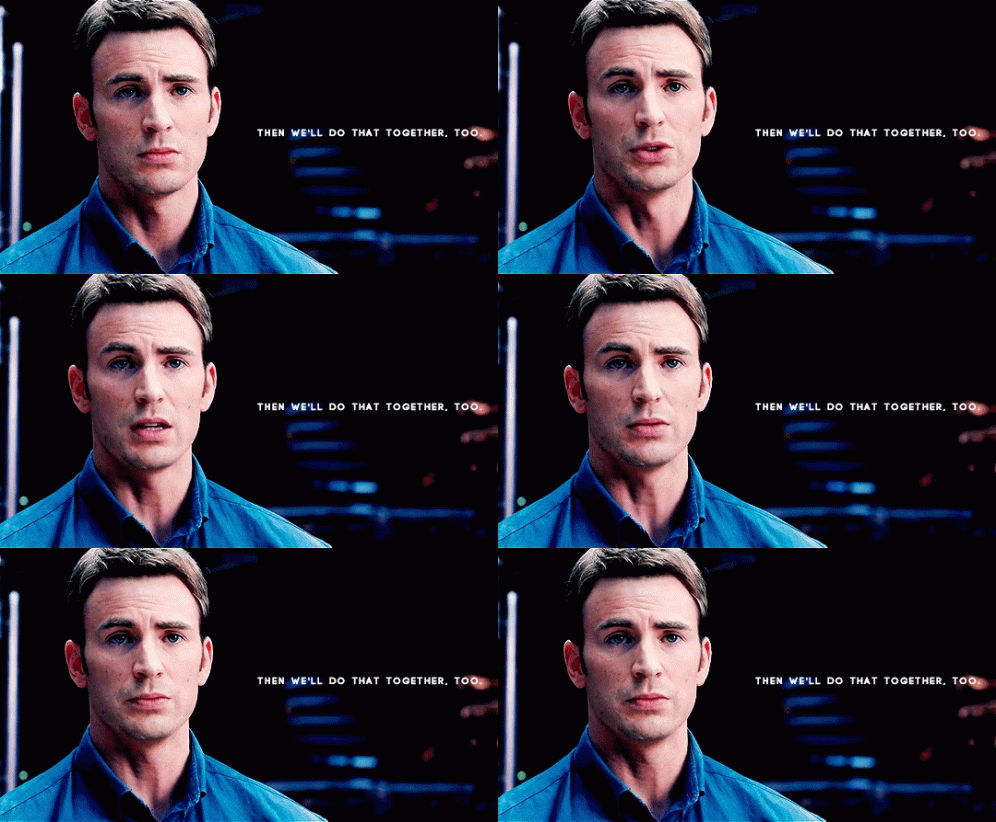
That moment really depends on three things.
First, you have to know the people coming through the portals, obviously.
Not all of them equally, but enough that the arrivals feel like returns instead of cameos. Spider-Man, Black Panther, The Guardians, Doctor Strange, even The Wasp all have to matter. Everyone we see needs to feel like their presence was essential.
Second, you have to feel the loss from Infinity War.
The Blip has to hurt. Peter turning to dust in Tony’s arms has to hurt. T’Challa disappearing has to hurt, beyond real-life reasons. Strange giving up the Time Stone has to feel like a terrifying gamble. The absence of half the universe has to sit there like a wound.
Third, you have to believe the remaining heroes earned the comeback.
Steve has to earn holding Mjolnir. Natasha has to earn Vormir. Scott has to earn being the ridiculous little hinge on which the whole plan turns. Thor has to learn he is still worthy after letting down the universe. Bruce has to earn the first Snap. Clint has to earn being pulled back from the edge. Anyone designed to have a sizable emotional impact needs to have enough weight behind them that the audience cares.
The order exists to protect those three things.
I’m going to explain why I include what I do and why I’m placing it where I am, so spoilers ahead.
Phase 1: Forming
- Iron Man (watch credits)
- Captain America: The First Avenger (skip credits)
- Thor (skip credits)
- Iron Man 2 (skip credits)
- The Avengers (watch credits)
The first phase has one job: get to The Avengers cleanly.
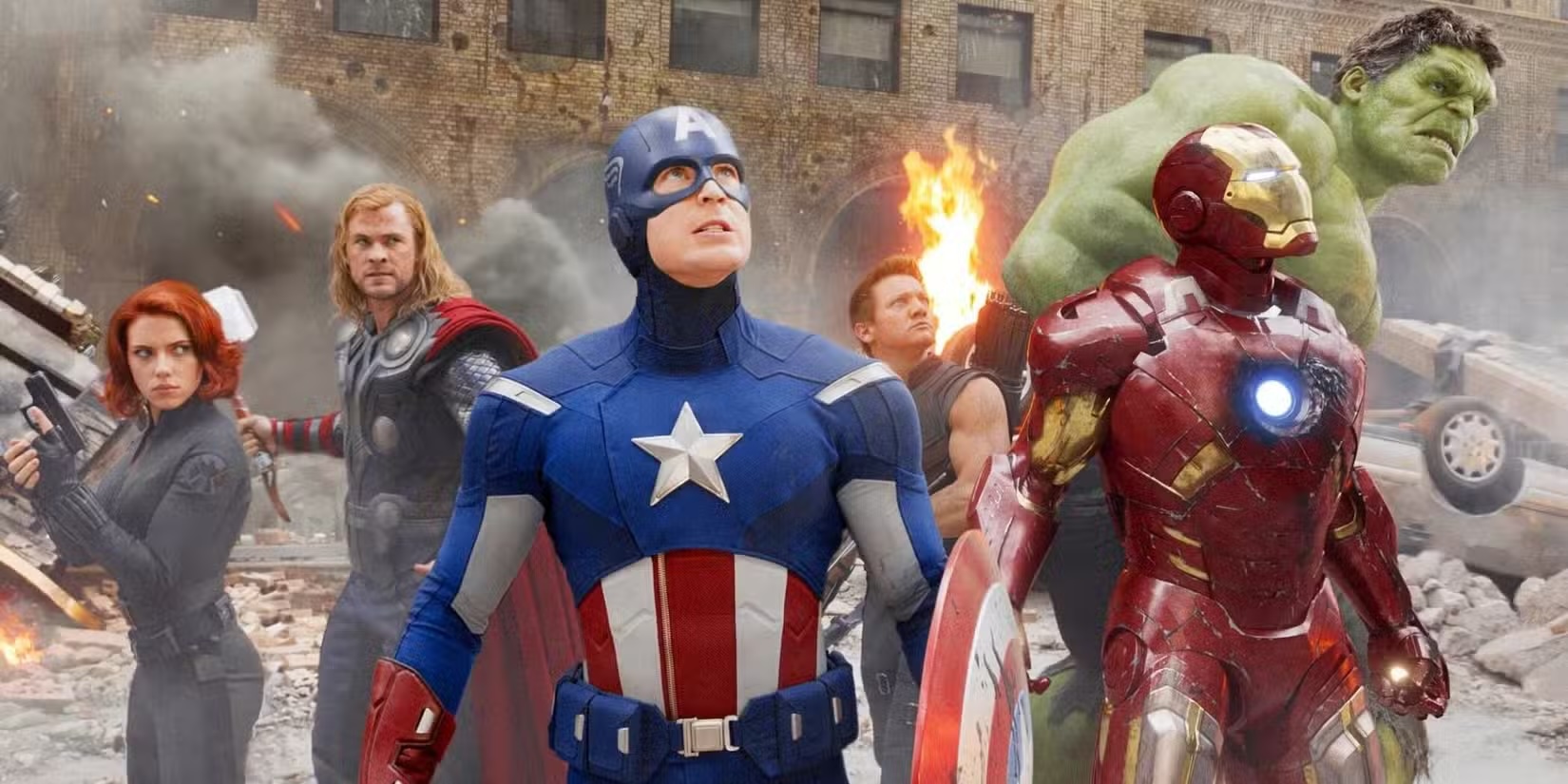
That cap suit still sucks, though
That means introducing Tony Stark, Steve Rogers, and Thor - the trinity of the MCU - in a way that steadily expands the world without making the MCU feel like nonsense too early. This phase is not about Thanos, the stones, or cosmic sprawl. It is about proving that technology, supersoldiers, gods, spies, and secret agencies can all coexist in one story.
Iron Man has to go first because it is the cleanest starting point. Tony is close enough to the real world that the audience learns the rules gradually: one impossible thing appears, then the world gets bigger around it.
Captain America: The First Avenger works best second because Steve’s story gains something once we already know the modern world. Howard Stark means more because we’ve already met him, and Steve immediately establishes himself as Tony’s moral opposite: not a futurist trying to clean up his own mess, but a genuinely decent person who could not stay on the sidelines. Pure liquid selfless sincerity in contrast to Stark’s sarcastic egomania.
Steve and Tony are the heart of the entire saga, and their origin films largely parallel each other which highlights their contrast. Tony reluctantly gets pulled into heroism by circumstance and a recognition that he needs to do what’s right. Steve is trying to be involved from the outset but is denied access because he’s too scrawny. Tony’s evolution is entirely self-directed as he applies his genius to create his transformation, while Steve’s transformation is foisted upon him by other geniuses who gift him his powers. Steve’s defining characteristic is that he’s “got a lot of heart” even before he has powers - Tony has to given a gift by Pepper that proves he even has one. Both films end with Fury approaching them, so the similarities and differences between these specific two men are well in focus.
Thor comes next because the scope needs to widen carefully. It introduces gods, aliens, and cosmic weirdness, but keeps enough of the movie on Earth that the jump still feels manageable. Jane functions as an audience POV, having this larger cosmic world exposed and explained to her; she is skeptical but the more she is around Thor, the more she begins to believe it, guiding us to acceptance along with her. Thor is stripped of his powers early so that we can spend most of the film getting to know him without godly powers straining credulity. Thor is not as essential to the story as Steve and Tony, but he does round out the trinity, and literally proves himself “worthy” of inclusion in the final moments of the film.
Iron Man 2 belongs right before The Avengers because its real function is setup. Natasha enters the field, Rhodey gets his armor, and the world starts to feel like it is organizing itself around a bigger event, establishing these films are connected to each other. The presence of SHIELD gets larger and larger in this order, which reinforces that it’s building to something.
That sequence makes The Avengers feel earned instead of arbitrary. By the time the team forms, the movie is cashing in groundwork rather than counting on brand recognition alone. Frankly, this set of five movies works as its own complete work, and one could reasonably stop there if not for the very slight tease after the credits that something worse is looming.
The Incredible Hulk is skipped. Skipping it actually helps The Avengers because Bruce enters that movie as a mystery and a threat. Everyone seems a little afraid of him, but we lack the full picture as to why, right up until his Helicarrier transformation that shows him as the wildcard he is meant to be at that moment, and he eventually earns his place on the team of heroes by illustrating he has just enough control over the beast.
So Phase 1 stays simple: establish the three pillars, widen the world in controlled steps, skip the piece that dilutes Hulk’s entrance, and arrive at The Avengers with enough momentum that it feels like a payoff.
Phase 2: Breaking
- Captain America: The Winter Soldier (watch credits)
- Thor: The Dark World (watch credits)
- Avengers: Age of Ultron (skip credits)
- Ant-Man (first credits scene only)
- Captain America: Civil War (first credits scene only)
Where Phase 1 builds the Avengers, Phase 2 tears them apart.
This is the phase where superhero success stops feeling simple. Institutions fail, private fears become public disasters, and the Avengers go from a triumphant idea to a political and personal problem.
Winter Soldier starts the phase because it attacks the foundation upon which the entire Avengers initiative is built. SHIELD turns out to be rotten. That immediately changes the meaning of everything Phase 1 accomplished and pushes Steve and Natasha into a less trusting, more damaged version of this world.
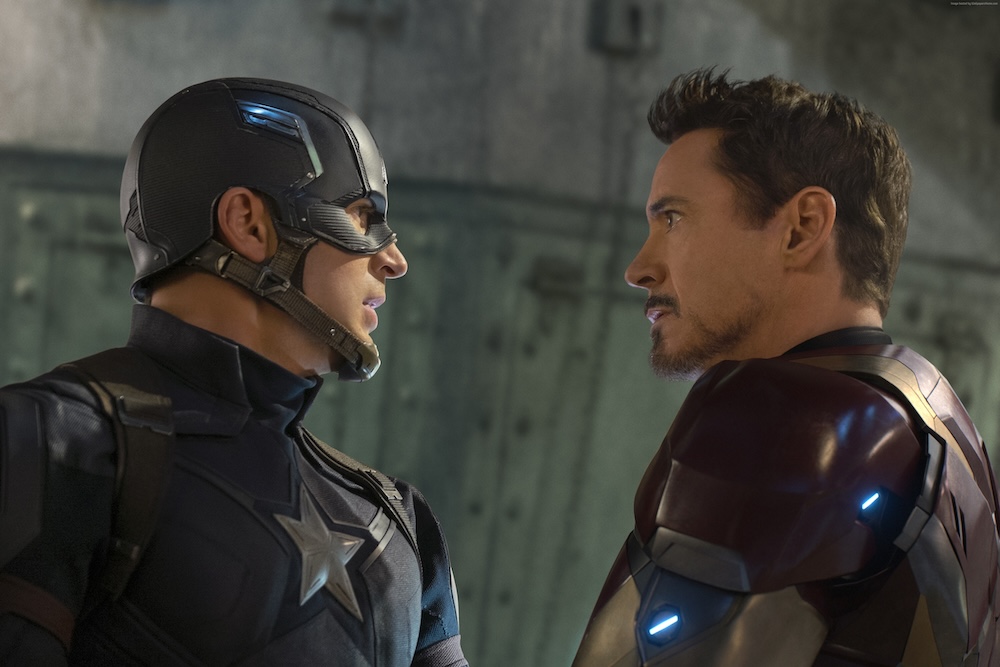
You have to save Martha!
The Dark World belongs here for similar reasons. It is not here because Malekith is everyone’s favorite villain. It is here because Thor’s side of the MCU also needs to lose some innocence. Asgard becomes vulnerable, Thor loses his mother, and the Infinity Stones get their first mention without the story going fully cosmic too soon. The Dark World is one of the worst MCU movies but it’s inclusion is redeemed by having it revisited in Endgame.
Age of Ultron turns fear into catastrophe. Tony is no longer reacting to danger; he is trying to get ahead of it and nearly destroys the planet in the process. Without Sokovia, Civil War would lose its most concrete argument. Age of Ultron is where the team dynamic really starts to break down, and a plea from Cap to stay together keeps things hanging on by a thread.
Ant-Man is lighter, but it still matters. It introduces Scott before Civil War so the airport fight does not feel random, and it shows another corner of superhero technology: legacy, corporate theft, and old grudges outside the main Avengers circle. The chilling evil of superhero powers in the wrong hands, unregulated. Scott winds up ironically becoming the linchpin of the Time Heist, so we need to understand who he is.
Civil War then cashes out the whole phase. Governments react, Tony reacts with guilt, Steve reacts with distrust, and the Avengers finally stop functioning as a unit. That split is the whole point of Phase 2, and it will loom over the rest of the saga.
This is also why Guardians of the Galaxy gets moved out. Release order puts it around here, but this phase needs to stay focused on the collapse of the Avengers, not jump to a separate team finding each other and coming together in space, that runs counter to the entire thematic thrust of the phase.
Iron Man 3 also gets left out. It has defenders, but the bigger problem is that the rest of the MCU does not honor its ending enough. Tony blows up the suits, removes the shrapnel, and appears ready for a different life, only for Age of Ultron to arrive with an even larger version of the same obsession.
By the end of Phase 2, the Avengers break up and go their separate ways. Hawkeye is under house arrest, Natasha is on the run, Thor leaves the group to investigate his visions, Hulk has gone off-world, and Steve and Tony are done speaking. The whole experiment is in pieces. Earth is defenseless, all because its defenders couldn’t get along.
Phase 3: Expanding (any order)
- Spider-Man: Homecoming (skip credits)
- Captain Marvel (skip credits, extremely important)
- Black Widow (first credits scene only, extremely important)
- Doctor Strange (skip credits)
- Black Panther (watch credits)
Civil War leaves a hole where the Avengers used to be, so Phase 3 asks who else exists in this world who may be able to fill the gap.
We go deeper on characters we briefly met in Phase 2, and add new characters to the mix, all to see if anyone can step in now that Earth is without it’s mightiest heroes. It is still mostly grounded in the aftermath of Civil War, but it starts building the supporting emotional inventory that Endgame needs.
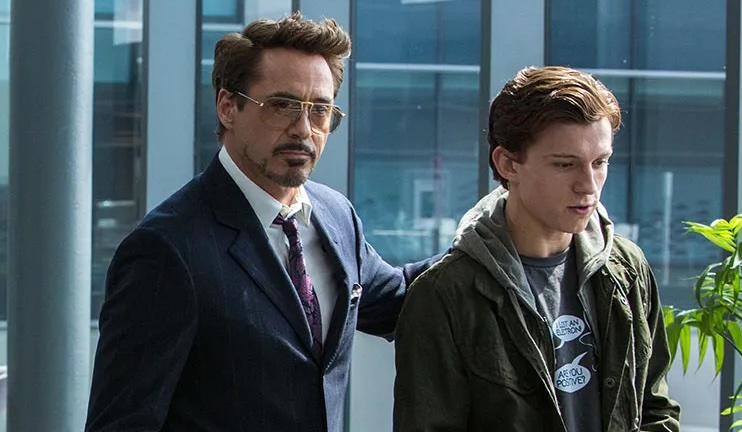
Yer an Avenger, Petey
Homecoming matters because Peter has to matter. Civil War introduces him as a fun complication; Homecoming turns him into a real person and builds the Tony-Peter relationship that Infinity War and Endgame both depend on. The scene in which Peter thinks Tony is trying to hug him has a particularly poignant payoff in Endgame.
Captain Marvel works better here as a strategic flashback. It introduces Carol well before Fury pages her in Infinity War, which keeps her from feeling like late-assigned homework or a course correction, and it also plays better before Guardians, when the audience does not already know the Kree are bad.
Huge spoilers in the first post-credits scene for Captain Marvel (which takes place after Infinity War), so skip them both. The second one is just a flerken gag.
Black Widow here is one of the biggest beneficiaries of this order. The movie gets a bad rap, but a lot of that comes down to timing. Released after Natasha was already dead, it felt like Marvel remembered too late that one of its original Avengers had never gotten a solo movie. But here, it is basically Natasha’s Winter Soldier: spy craft, buried identities, false family, coercive institutions, and a completely unhinged action climax in the sky. Most importantly, it tells us what Natasha escaped, what she still carries, and what family means to somebody trained to distrust attachment.
This is another place where credits-scene management really matters. Black Widow’s first stinger bridges well into Infinity War; but the graveyard scene does not belong anywhere near an Endgame-focused run. The first “post-credits” scene occurs immediately after the end of the movie, before any credits can run, and is arguably not even a post-credits scene in that sense, make sure you stop after Natasha gets the Quinjet.
Doctor Strange is here because Endgame needs more than just another hero. It needs magic, time manipulation, and a whole category of defenders operating outside the Avengers’ line of sight. The portals scene would still function mechanically without that groundwork, but it would not feel nearly as satisfying.
Black Panther belongs in this phase because Wakanda cannot just be a battlefield. It has to be a place with people, politics, and emotional meaning, or the return of T’Challa and Wakanda in Infinity War and Endgame loses a lot of force.
Though Phase 3 works in any order, I do personally think this order is the most balanced, as all things should be. Phase 3 is about the stories of heroes we know but not well, as well as heroes we are just meeting. This order places one of each on opposite sides of the story of an original Avenger. We spread the less-grounded weirder stuff further apart interspersed with pretty grounded stories, and we end on Black Panther which has the most epic feel with the largest group.
There is a reason that Phase 3 can be watched in any order: none of the movies connect to each other. We meet new potential heroes, almost like auditions for the position, but they are not a TEAM. It is a bunch of solo films that never cap-off with an Avengers-level team-up, in contrast to the similarly-structured Phase 1. And that is ultimately what makes them fail in Infinity War. They never coalesce together, and they are all weaker on their own.
Phase 4: Losing
- Guardians of the Galaxy (watch credits)
- Thor: Ragnarok (first credits scene only)
- Guardians of the Galaxy Vol. 2 (skip credits)
- Ant-Man and the Wasp (watch credits)
- Avengers: Infinity War (watch credits)
Phase 4 is where the order finally turns straight at Thanos.
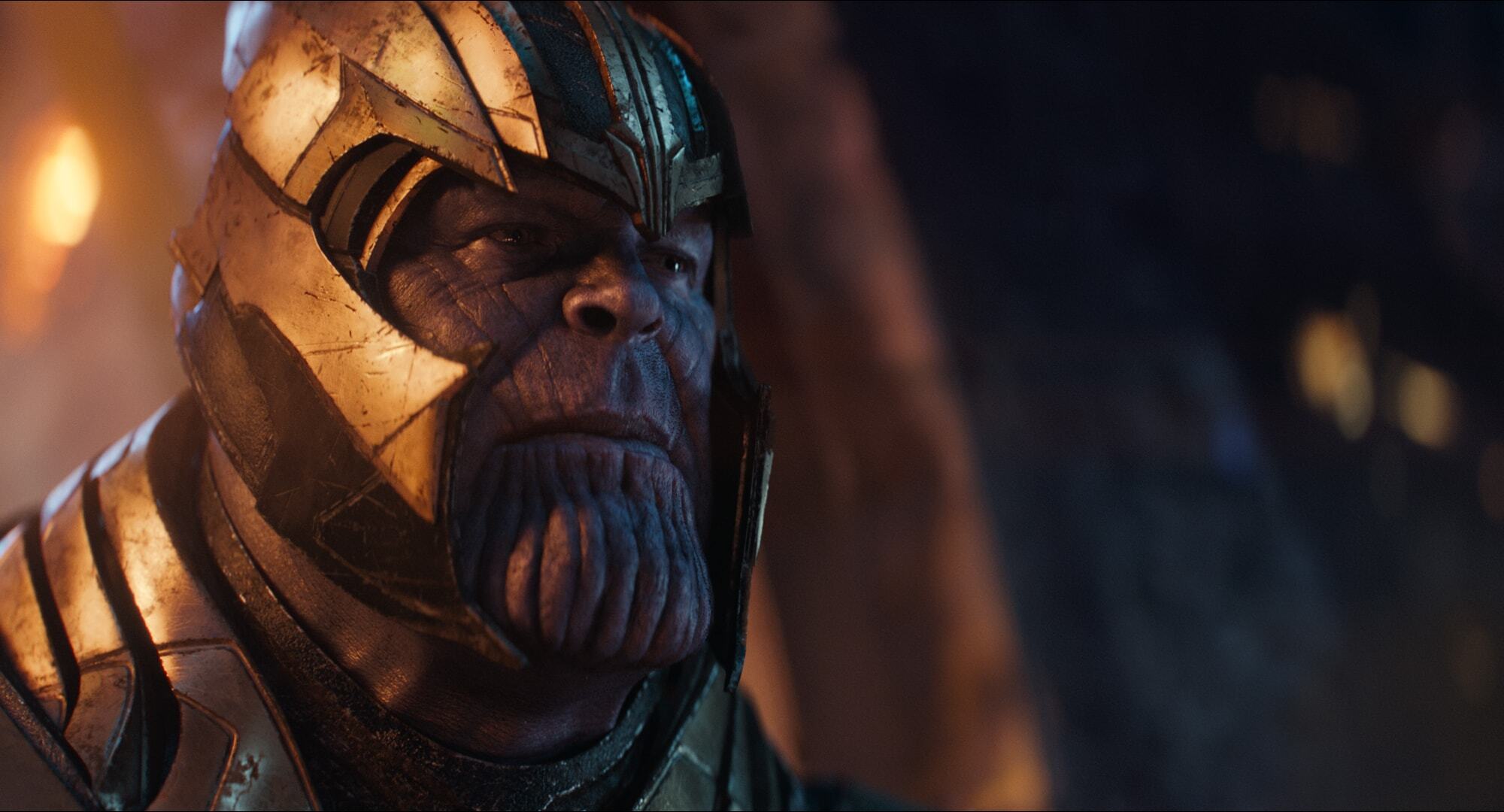
Purple helmeted warrior
Up to this point he has mostly been a background idea, which is why Guardians of the Galaxy belongs here instead of earlier. Earlier it would have pulled the story sideways. Here it turns the whole order forward. Thanos becomes a real problem, the Infinity Stones get fully explained, and the artifacts from earlier movies snap into a coherent structure with audience recognition. It also matters that this is where we meet Gamora and Nebula, because Thanos works much better once he is tied to actual characters instead of existing as a distant purple mystery. The Guardians come together despite their many differences because they are all losers (as in, people who have lost something).
Ragnarok follows well because it strips Thor’s side of the universe down to the studs and then hands it directly to Thanos in the credits scene. It is one of the clearest examples of a reordered movie doing useful work instead of just moving for novelty’s sake. Thor loses his hammer, his friends, his dad, his hair, his eye, and his home.
Guardians Vol. 2 stays in the phase because the Guardians need more emotional weight before Infinity War. Vol. 2 is all about fathers, abuse, control, and chosen family, which is exactly the territory Thanos occupies. Ego calls his selfishness purpose. Thanos calls his cruelty love. Yondu, for all his flaws, ends up making the right choice, and Quill loses him as well.
Ant-Man and the Wasp is another noteworthy relocation, but it fits with the theme of larger cosmic settings, by focusing on the Quantum Realm. In release order it comes after Infinity War as a tonal breather. For this kind of run, that is the wrong job. You cannot go from half of all life turning to dust to a breezy heist comedy where nobody seems especially shaken. The tonal whiplash is disastrous. Infinity War should run straight into Endgame with the wound still open.
So Ant-Man and the Wasp moves before Infinity War. Almost to remind us Earth even still exists before Thanos targets it next. And yes, we watch the post-credits scene. People will say it spoils Infinity War, incorrectly. You see Scott go into the Quantum Realm and then watch Hank, Janet, and Hope disappear. You do not know the mechanism yet. It plays as a mystery - one with a distinctive visual calling card, the dusting.
Later, when Thanos snaps in Infinity War and people begin turning to dust, you recognize the visual and realize it at the same moment the movie wants dread to become comprehension.
The heroes lose because they are powerful but scattered. Division is represented in every aspect of Infinity War, it is the running theme - there is no scene where all of the heroes are together, they are constantly being separated by portals and spaceships and geography. Thanos takes on subslices of the roster, besting each group.
Not because the heroes are weak. Not because they do not try. Because they are not together.
Even the attempt to destroy the Mind Stone without killing Vision underscores this. Shuri and Bruce, both scientific geniuses, do not gel nearly as well together as Tony and Bruce did when they created Vision, and as a result they run out of time and Vision has to re-enter the fight, exposing him to Thanos. Had Tony been in the room and all three MCU big-brains had been working on saving Vision, they could have easily succeeded, destroyed the stone, and prevented the Snap. But they were not together, so they failed.
It is not a coincidence that the characters who get dusted are mostly the new ones introduced in Phase 3 and 4. To defeat Thanos, the original team will have to overcome their divisions and reunite themselves, and then bring everyone back. Even the dusting itself reinforces the theme: each character is literally disassembled.
Phase 4 is the final loss, the sudden realization that failing to live up to Fury’s vision for a team had catastrophic consequences. And then we see Fury’s last hail mary as he himself is dusted away: a desperate call to Carol.
Finale: Avengers: Endgame
- Avengers: Endgame
This is the centerpiece. Not a setup for the next phase. Not a pause before the franchise assigns you six streaming shows and a comprehension test.
Endgame starts by continuing the defeat of Infinity War, relishing in the sorrow. Hawkeye loses his family. Tony and Nebula are stranded. The remaining Avengers find Thanos and discover the Stones are gone. Thor kills him, and it fixes nothing.
Then five years pass.
That five-year jump is one of the smartest decisions in the movie. It forces the loss to become life instead of a cliffhanger. Steve runs grief counseling. Natasha cannot move on. Tony tries to build a family. Thor collapses inward. Call me a contrarian, but I love Fat Thor, hands-down one of my favorite portrayals of depression ever filmed, and a brave choice to keep him fat the whole movie and yet remain a hero2. Bruce finds a strange kind of equilibrium (offscreen, lamentably). Clint turns into a grief-powered weapon. Everything, frankly, sucks.
The audience is ahead of the movie because they have knowledge the heroes don’t. Scott Lang is still in the Quantum Realm. When he shows up, the audience already knows the plan. The time heist is ridiculous, but in the right way. The point is not airtight time-travel logic. The point is to send these characters back through the story we just watched so they can confront what they were, what they lost, and what they still owe. Three teams are dispatched to different points in time: each one visually tied to a particular film’s setting, each of those occurring in different phases.
Endgame is answering not just Infinity War, but Civil War too. The portals scene is not only the undoing of the Snap. It is the Avengers and the wider universe around them finally becoming what Fury imagined back in the first Iron Man stinger. Finally, everyone unites all on the same page, against a common threat.
Then Cap finally says the line he’s been denied the entire series because it wasn’t until now that it was earned. It’s not just fan service. It’s the entire point of the series arc, the recognition that coming together is and has always been the only way.
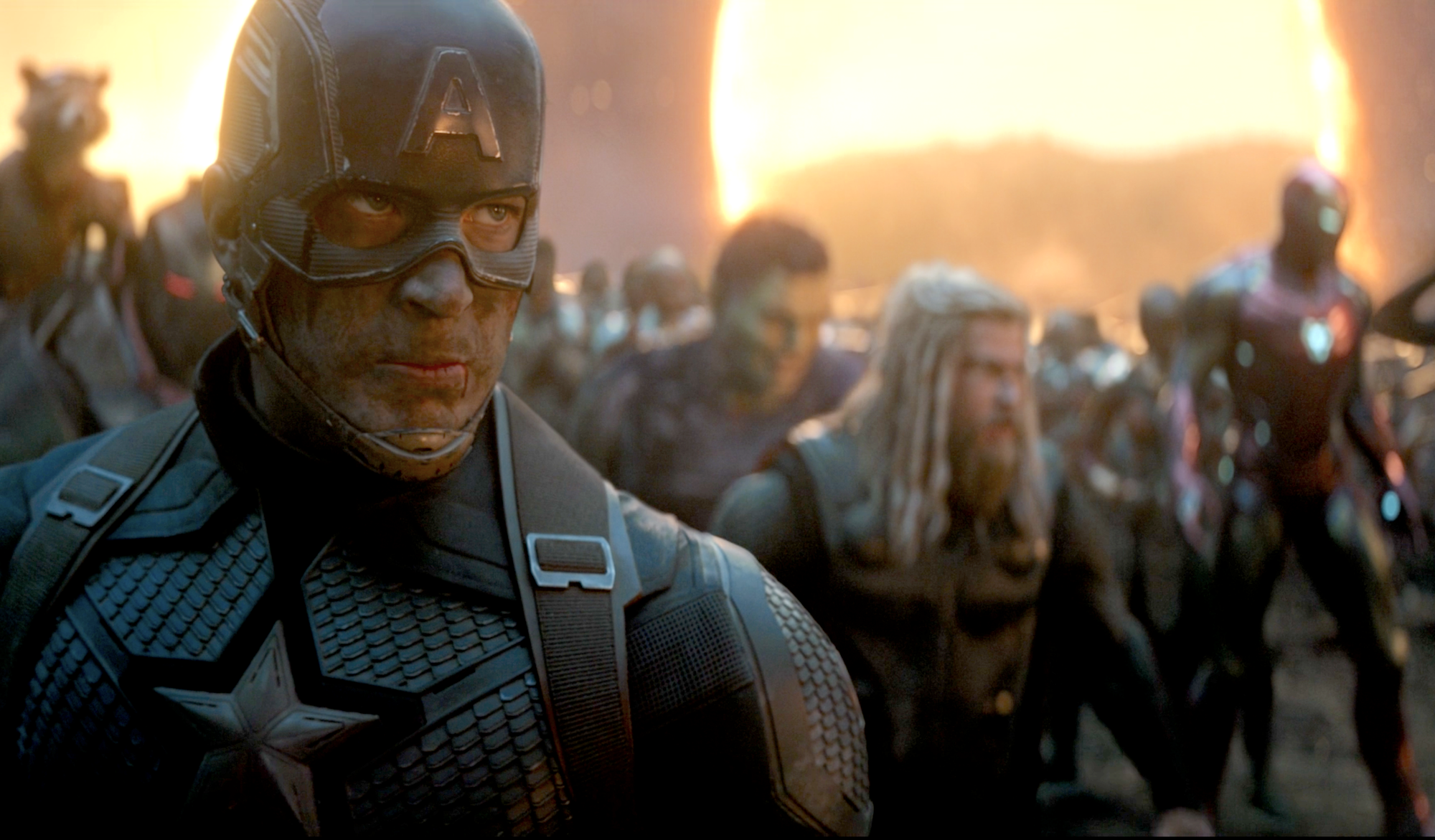
Avengers, assemble!
If that does not work for you, I do not know what to tell you. If you don’t get hyped as hell from this scene, you and I are looking for very different experiences when watching movies. People are more than happy to argue that Endgame isn’t the best movie in the series and I would agree (that’s Winter Soldier), but Endgame contains the single greatest moment in the entire saga, one of the greatest moments ever committed to film.
The final victory belongs to Tony. “I am Iron Man” closes the loop opened in the first movie when it was said out of egotism, bookending the whole thing as it is repeated out of altruism. The futurist who kept trying to solve fear with armor finally accepts that the cost is himself. It starts with Tony in a cave trying to save himself, and it ends with Tony in the middle of a battlefield saving everyone else, laying on the wire instead of cutting it.
Steve gets his ending too. He returns the stones, then returns to the life he lost. You can argue about the time travel mechanics if you want, but emotionally it is right. Tony gives his life. Steve gets his. Both of them learned to see the value in the other’s way of thinking.
The movie ends with Tony’s funeral and Steve’s dance.
There is no credits scene. The saga is over.
Optional Epilogue
But…
If you want an epilogue, there are five movies that work, not because they launch a new era or expand the mythology, but because they give closure to characters we already care about and whose character arcs are not completed by the end of Endgame.
- Spider-Man: Far From Home (first credits scene only)
- Thor: Love and Thunder (skip credits)
- The Marvels (skip credits)
- Spider-Man: No Way Home (skip credits)
- Guardians of the Galaxy Vol. 3 (watch credits)
This is the rule for the optional epilogue: no expansion, only closure.
Spider-Man: Far From Home works because Peter is still living in Tony’s shadow. Endgame gives Tony a conclusion, but it leaves Peter grieving for the man who became his mentor. Far From Home deals directly with that. Peter has to decide whether he is supposed to become the next Iron Man or whether he is allowed to just be Spider-Man. Watch only the first credits scene because it sets up the identity crisis that No Way Home resolves. Skip the second because it points outward to broader MCU machinery, which is exactly what the epilogue is not for.
Thor: Love and Thunder functions better as a Thor epilogue than as a Marvel franchise product. It has problems. Several. A frankly impressive number of problems. But it does give Thor something Endgame does not quite give him: a place to put his love after loss. By the end, he has a daughter to care for and a life that is about more than kingship, heroism, or surviving the latest disaster.
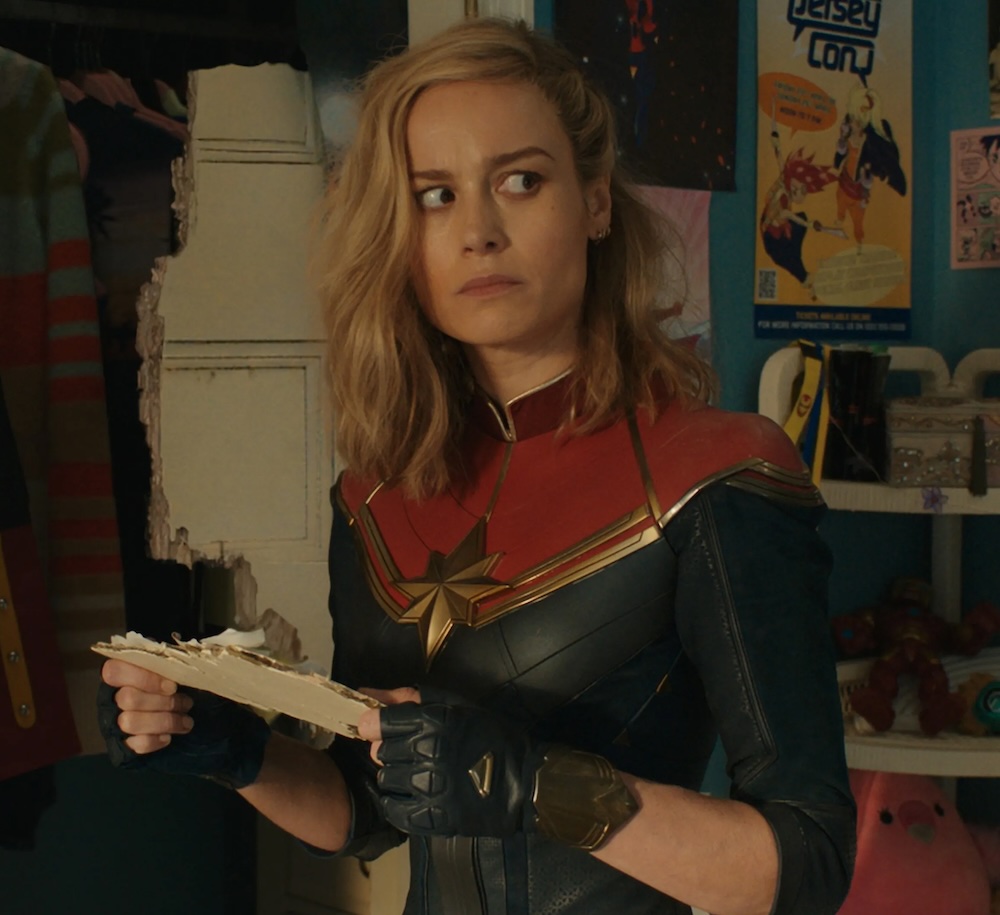
Carol reads the script
The Marvels fits as an epilogue because Carol is more herself in it. Captain Marvel introduces her, but in a fairly constrained origin-story mode where she spends much of the movie discovering who she is. The Marvels lets her be looser, warmer, stranger, and more human. It also deals with the consequences of her choices and her inability to be everywhere for everyone. As an epilogue, that is useful. It gives Carol more texture without requiring the main Endgame order to bend around her. Kamala’s introduction is unfortunately a bit clunky if you didn’t watch the show, but her character is who makes the movie work at all.
Spider-Man: No Way Home finishes Peter’s epilogue. Far From Home asks what Peter does with Tony’s legacy. No Way Home strips everything away until Peter becomes exactly what the ending needs him to be: a friendly neighborhood Spider-Man, alone, anonymous, sewing his own suit, doing good without Stark tech, Avengers access, or institutional support. It is painful, but it is clean. The biggest issue is that while No Way Home provides good closure to Peter’s story, I’m not sure it works without watching a bunch of previous Spider-Man movies, which I am explicitly not recommending as part of this order.
Guardians of the Galaxy Vol. 3 closes the Guardians. More specifically, it closes Rocket, which turns out to have been the hidden emotional center of the whole Guardians trilogy. It also brings Peter Quill home and deals with the new Gamora, who is not obligated to become the dead Gamora just because everyone misses her. The team changes, people leave, people heal, and the story ends with something like peace. I would definitely recommend it last because it works as the second-best endcap (the best being, again, Endgame itself).
Any of these are optional. If Carol didn’t resonate, skip The Marvels. If Fat Thor joining the Guardians of the Galaxy is sufficient as an ending for him, don’t bother with Love and Thunder or even Guardians 3.
Could you leave all of this out? Yes, any subset of it.
I personally prefer Endgame as the end. But if you want a little more farewell, these five work because they are not really about opening the universe further. They are about giving final notes to Peter, Thor, Carol, Quill, Rocket, and Gamora.
Give It A Shot First
I do not think everyone needs to watch the MCU this way.
Release order is fine. Chronological order exists for people who sort Skittles before eating them. Watching everything is fine if you have the time, the stamina, and an unusual tolerance for the word “variant”
But if you want to show someone the MCU as a story with a definitive arc and ending, this is the way. The Avengers form, break, fail, and finally assemble in the biggest, most emotionally effective comic-book movie moment anyone has ever put on a screen.
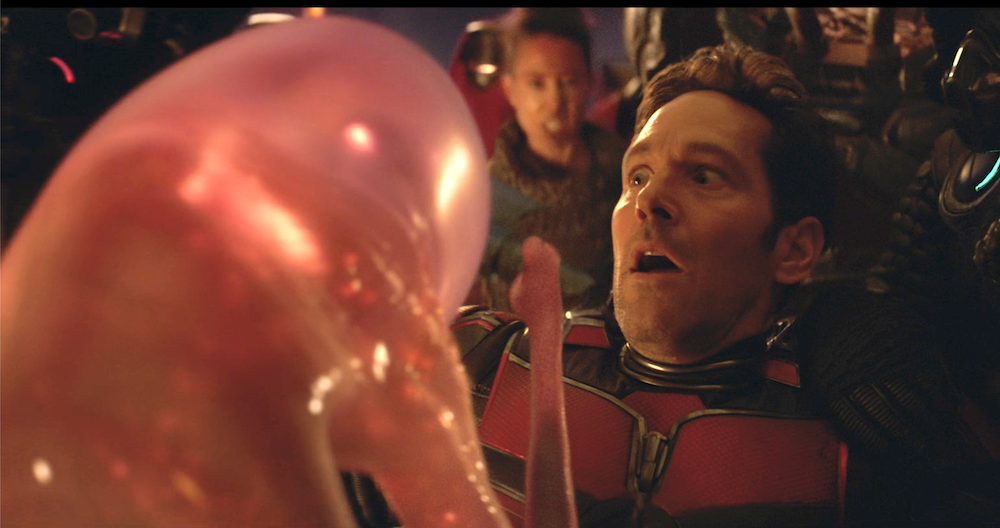
Do it, hop into the comments to defend Quantumania
This isn’t just my attempt to cling to cultural relevance and boost the phase “machete order” in search results, or to see if I can get the two guys on The Escape Pod to have an actual aneurysm. I legitimately showed my kids the movies in this order and it was fantastic, not only as a way of experiencing the MCU broadly but specifically as an introduction for newcomers. This is how I would recommend showing someone who hasn’t seen any Marvel movies. And it’s all canon, so if someone wants to stay in the MCU past these movies, there’s more than enough slop in the trough to fill your belly.
If I could have, I’d have trimmed even more from here, especially the entries I don’t think are very good. I tried so hard to figure out a way to excise Iron Man 2, The Dark World, Captain Marvel, Age of Ultron, Ant-Man and the Wasp, and Guardians 2, all of which I don’t think are particularly great. But sadly, I believe they are essential to maximizing the impact of Endgame.
If you have ever watched those portals open and felt your entire nervous system stand up and salute, you already understand the point of all this. My children cried for the portal scene when it happened. My son was emotionally devastated when Tony - his favorite - died. So if you want to be an excellent father like me, try it out.
-
Yes, it’s First Class, X-Men, X2, Days of Future Past, and nothing else. ↩
-
I love the way Fat Thor begs the team to let him wear the infinity stones to bring everyone back. He’s so desperate for a win to offset his loss after loss, but yields the privilege to Banner because more than he wants redemption, he wants it to work. Fat Thor underrated. ↩